Proactive Compliance: A Recreation Director's Roadmap to Meaningful Accessibility Assessments
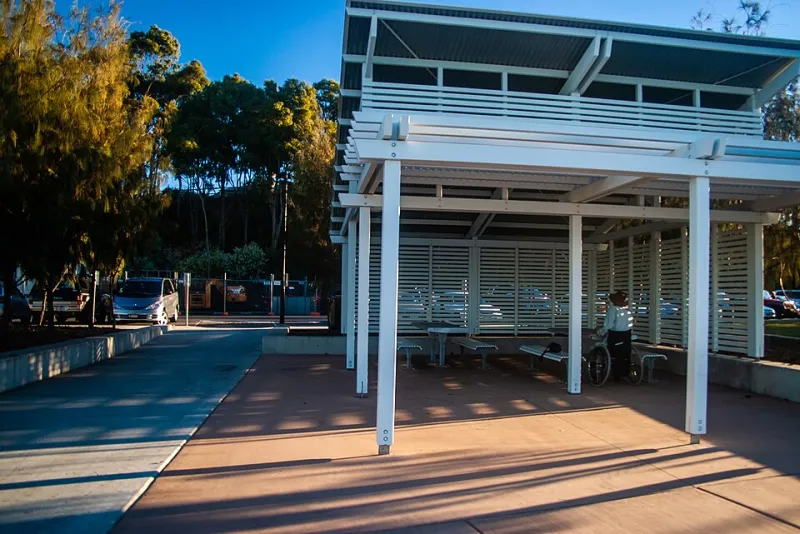
Photo: John Robert McPherson, CC BY-SA 4.0, via Wikimedia Commons
Why Reactive Compliance Is No Longer Acceptable
For decades, many park and recreation departments operated under an unofficial policy of addressing ADA concerns only when formally challenged. That approach has grown increasingly untenable. The U.S. Department of Justice has intensified its scrutiny of public accommodations, and advocacy organizations have become more adept at identifying systemic accessibility failures across municipal facilities. Beyond the legal exposure, there is a compelling programmatic argument: recreation departments exist to serve entire communities, and facilities that exclude individuals with disabilities are failing a core institutional mandate.
The good news is that a well-executed accessibility audit transforms compliance from a reactive burden into a strategic planning asset. When directors understand precisely where their facilities stand — and document that understanding — they gain negotiating power with elected officials, a defensible framework for capital budgeting, and a clearer picture of how to phase improvements responsibly over time.
Understanding the Scope of an Accessibility Audit
An accessibility audit is not simply a walk-through with a measuring tape. A comprehensive assessment examines the physical built environment, programmatic access, communication systems, and staff training protocols simultaneously. The 2010 ADA Standards for Accessible Design remain the governing technical document for most facilities, but recreation-specific guidance from the Architectural and Transportation Barriers Compliance Board — commonly known as the Access Board — adds important nuance for playgrounds, swimming pools, fitness facilities, and sports courts.
Before scheduling any site visits, directors should assemble a complete inventory of all facilities under their jurisdiction. This includes not only primary recreation centers but also satellite sites, trailheads, picnic shelters, sports complexes, and aquatic facilities. Each asset category carries distinct compliance requirements, and omitting even minor facilities from the audit scope can create legal vulnerabilities.
Directors should also determine whether they will conduct the assessment in-house, engage a Certified Accessibility Inspector/Plans Examiner (CAIPE), or retain an architectural firm with demonstrated ADA expertise. In-house assessments are cost-effective for preliminary gap identification, but they carry limitations. Staff members may lack the technical training to recognize nuanced deficiencies — a door hardware configuration that technically meets dimensional requirements but fails the operability standard under 309.4, for instance — and their findings may carry less weight in a legal proceeding. Many departments use a hybrid model: trained staff complete an initial screening using a standardized checklist, and a credentialed consultant then conducts a formal review of flagged areas.
A Practical Audit Checklist for Recreation Facilities
The following framework provides a starting point for internal assessments. It is not exhaustive and does not substitute for professional evaluation, but it helps staff identify priority areas before a consultant engagement.
Site Arrival and Parking
- Are accessible parking spaces present in sufficient quantity per the facility's total space count?
- Do van-accessible spaces provide the required 98-inch vertical clearance and eight-foot access aisle?
- Is the accessible route from parking to the facility entrance continuous, stable, and free of cross-slope exceeding 2 percent?
Building Entrances and Circulation
- Do primary entrances have compliant maneuvering clearance on both sides of the door?
- Are door hardware configurations lever-style or otherwise operable with a closed fist?
- Do interior corridors maintain a minimum 36-inch clear width, with 60-inch passing spaces at intervals?
Restrooms and Locker Rooms
- Do accessible toilet compartments meet current dimensional requirements, including the 60-inch turning radius?
- Are grab bars positioned at the correct height and capable of supporting 250 pounds of force?
- Do shower facilities include a compliant roll-in option with a fold-down bench and handheld showerhead?
Aquatic Facilities
- Does the pool provide at least one accessible means of entry — either a sloped entry or a pool lift meeting the 2010 Standards?
- Are pool lifts unobstructed, maintained in operable condition, and capable of being independently operated by a user?
Outdoor Recreation Areas
- Do playground surfaces within the accessible route meet ASTM F1951 standards for firmness and stability?
- Are at least 50 percent of elevated play components accessible via a ramp or transfer system?
- Do trailheads provide accessible parking, signage, and a surface that meets the Outdoor Developed Areas guidelines where applicable?
Programmatic and Communication Access
- Are registration processes available through accessible digital platforms and telephone?
- Do staff members receive regular training on effective communication with individuals who have disabilities?
- Is assistive listening equipment available and maintained for programs conducted in large assembly spaces?
Lessons from Departments That Got It Right
The City of Fargo Parks District in North Dakota undertook a systemwide transition plan following a self-evaluation that revealed significant gaps across its older recreation center inventory. Rather than attempting to address all deficiencies simultaneously — a financially impossible task — the department worked with an accessibility consultant to assign each deficiency a priority tier based on two variables: the severity of the barrier and the frequency with which the affected space was used. High-use, high-severity barriers were addressed in the first capital cycle. Lower-priority items were incorporated into routine maintenance and renovation schedules. The department also created a public-facing summary of the transition plan, which demonstrated good-faith effort and helped deflect potential complaints during the multi-year improvement period.
In a different context, a mid-sized parks department in the Mountain West region discovered during its audit that several of its newest playgrounds — installed within the previous five years — had accessible surfacing that had degraded significantly due to freeze-thaw cycles. The lesson: compliance is not a one-time certification. Ongoing maintenance protocols must specifically address accessibility features, and annual inspections should verify that surfaces, lifts, and hardware remain in compliant condition.
Prioritizing Improvements Within Budget Realities
Most recreation departments cannot remediate every identified deficiency in a single fiscal year. A defensible prioritization framework considers three factors: the degree to which a barrier excludes individuals from a fundamental program or service, the cost-effectiveness of the remediation relative to its impact, and the department's existing capital improvement schedule.
Accessibility consultants consistently advise against deferring barrier removal simply because a full renovation is planned for the future. If a pool lift is non-functional today, waiting three years for a facility overhaul means three years of documented exclusion. Interim solutions — portable ramps, temporary accessible parking reconfigurations, equipment rentals — may not be architecturally ideal but demonstrate active good-faith compliance efforts.
Grant funding can meaningfully accelerate improvement timelines. The Land and Water Conservation Fund, administered through the National Park Service, supports outdoor recreation facility upgrades and has funded accessibility improvements at numerous municipal sites. The Community Development Block Grant program, administered by HUD, is another avenue for departments serving communities with qualifying demographic profiles.
Building a Culture of Continuous Improvement
The most durable accessibility programs treat compliance not as a legal threshold to clear but as an ongoing commitment to inclusive design. That cultural orientation starts with leadership. When directors publicly frame accessibility investments as programmatic priorities — not just risk management exercises — it signals to staff, elected officials, and community members alike that the department takes its service mission seriously.
Establishing an internal accessibility coordinator position, even on a part-time or collateral-duty basis, provides institutional continuity between audit cycles. This individual can monitor regulatory updates from the Access Board, maintain documentation of completed improvements, and serve as a first point of contact for community members who encounter barriers.
The goal, ultimately, is a recreation system where no resident arrives at a facility and is turned away by its design. That outcome requires deliberate, documented, and sustained effort — beginning with an honest assessment of where things stand today.