Idle Hours, Lost Revenue: How Facility Utilization Audits Can Transform Your Recreation Department's Bottom Line
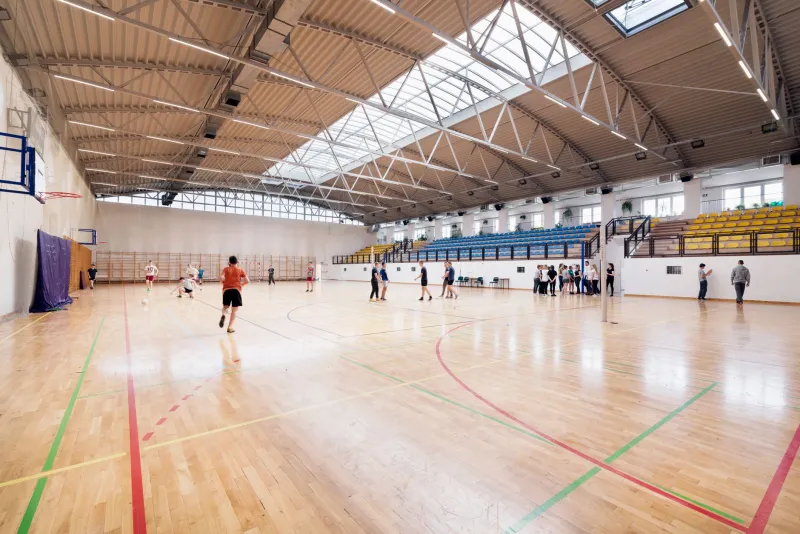
For many municipal recreation departments across the United States, the challenge is rarely a shortage of space. Gymnasiums sit dark on Tuesday mornings. Aquatic centers operate at a fraction of lane capacity during shoulder seasons. Multipurpose rooms host one weekly program when they could reasonably accommodate four. The facilities exist. The infrastructure has been funded. Yet the revenue — and the community value — those assets could generate remains largely uncaptured.
This is the utilization paradox: departments that struggle to justify budget requests to city councils are simultaneously operating facilities at a fraction of their functional capacity. Addressing this gap does not require new construction, major renovations, or expanded staffing rosters. It requires a disciplined, data-informed approach to understanding how existing spaces are being used — and, more importantly, how they are not.
What a Facility Utilization Audit Actually Measures
A utilization audit is not simply a count of how many programs appear on a seasonal brochure. It is a systematic examination of when, how, and by whom each facility space is occupied relative to its total available hours.
Effective audits typically measure three core dimensions:
Temporal utilization tracks occupancy by time of day, day of week, and month of year. This dimension reveals the scheduling patterns that most departments already sense intuitively — peak evening hours are oversubscribed while mid-morning weekday slots go unfilled — but rarely quantify with enough precision to act on strategically.
Spatial utilization examines whether the physical configuration of a facility matches the programming it hosts. A regulation gymnasium divided into three activity zones for a small youth fitness class represents a spatial mismatch that reduces both capacity and potential concurrent revenue.
Revenue yield per available hour compares the actual revenue generated during occupied periods against the theoretical maximum if the same hours were filled at standard rental or program rates. This metric is particularly useful for identifying not just unused time, but underpriced time.
Many departments have the raw data to conduct this analysis already sitting in their reservation management software, registration platforms, and facility booking logs. The work lies in aggregating and interpreting it.
Identifying Seasonal Dead Zones Before They Become Budget Problems
Seasonal patterns present one of the most predictable — and most overlooked — utilization challenges in public recreation. Outdoor facilities face obvious weather-driven demand cycles, but indoor facilities are not immune. Participation in many structured programs drops sharply in summer months when families travel, in December around the holiday period, and during the transition weeks between seasonal programming cycles.
Rather than accepting these dead zones as fixed features of the operational calendar, recreation managers should treat them as scheduling inventory available for alternative programming or rental partnerships.
Several strategies have demonstrated success in filling these gaps:
- Short-term specialty programming targeted at populations with counter-cyclical availability, such as older adults during summer months when youth programming recedes, or homeschool families during traditional school-day hours.
- Corporate and organizational rentals marketed specifically to local businesses seeking off-peak fitness opportunities, team-building venues, or meeting space. Many small and mid-sized businesses actively seek affordable, well-maintained event spaces and have no particular attachment to peak scheduling windows.
- Pop-up partnerships with community organizations, nonprofits, and cultural groups that may not require long-term commitments but can fill discrete scheduling gaps while also broadening the department's community relationships.
The key is treating seasonal softness not as a programming failure, but as a revenue opportunity that requires active marketing rather than passive acceptance.
Right-Sizing Programming to Match Actual Demand
One of the more uncomfortable findings that utilization audits sometimes produce is evidence that certain long-standing programs are consuming premium scheduling slots while serving relatively small participant populations. This is a politically sensitive issue in public recreation, where established programs often have vocal constituencies and historical momentum.
Nevertheless, the data-driven case for right-sizing is straightforward: a program enrolling eight participants in a space designed for forty, scheduled during a two-hour block on a Friday evening, represents an allocation decision that forecloses other revenue-generating uses of that space. When multiplied across a full seasonal calendar, these small mismatches compound into significant opportunity costs.
Right-sizing does not necessarily mean eliminating programs. It may mean consolidating sections, adjusting session lengths, shifting programs to lower-demand time slots, or transitioning from department-run programming to a rental or partnership model where external instructors bear more of the scheduling risk.
The goal is to ensure that the highest-demand, highest-revenue scheduling windows are reserved for uses that maximize both community participation and departmental return — while lower-demand programming finds appropriate homes in lower-demand time slots.
Building Hybrid-Use Models That Serve Multiple Stakeholders
The most durable solution to chronic underutilization is not a one-time scheduling overhaul but a structural shift toward hybrid-use facility models that build flexibility into the operational framework from the outset.
Hybrid-use models acknowledge that a single facility space can serve different functions for different user groups at different times — and that this diversity of use is a financial asset rather than an operational inconvenience. A community center gymnasium might function as a structured recreation program space on weekday evenings, a faith community gathering space on Sunday mornings, a corporate fitness venue on weekday middays, and a youth sports training facility on Saturday afternoons.
Implementing hybrid-use models effectively requires several operational prerequisites:
Standardized space configuration protocols that allow rooms to be transitioned between uses efficiently without requiring significant staff time or equipment investment.
Tiered pricing structures that distinguish between community-benefit uses, nonprofit partnerships, and commercial rentals — allowing departments to fulfill their public service mission while capturing market-rate revenue from commercial users.
Transparent booking systems that give external partners visibility into available scheduling windows, reducing the administrative burden on department staff while making the department a more attractive venue partner.
Clear use agreements that define expectations around setup, breakdown, facility condition, and liability — protecting departmental assets while providing external users with the certainty they need to commit to recurring reservations.
Turning Audit Findings Into Budget Arguments
Beyond the direct revenue implications, facility utilization audits generate something equally valuable for recreation administrators: documentation. When a department can demonstrate to a city council or county commission that its facilities are operating at a quantified utilization rate, that its proposed scheduling changes are projected to increase revenue by a specific percentage, and that its hybrid-use model is already generating measurable returns, the budget conversation changes character entirely.
Utilization data transforms abstract claims about operational efficiency into concrete evidence of management competence. It positions recreation administrators not as advocates asking for resources, but as asset managers demonstrating stewardship of the public investment already made in parks and recreation infrastructure.
For departments navigating tight municipal budgets and competing capital priorities, that distinction is not a minor rhetorical advantage. It is the difference between a budget request that survives scrutiny and one that does not.
The facilities are already there. The hours are already available. The question is whether your department has the data to know what it is leaving on the table — and the operational strategy to stop leaving it there.