Competing for Community: How Recreation Departments Can Win Back Younger Adults in a Crowded Wellness Market

For decades, the municipal recreation department occupied a largely uncontested position in community life. It was where adults played softball, where families swam in summer, and where seniors gathered for low-impact fitness classes. That position is no longer secure. Younger adults—broadly defined here as those between 22 and 40—are increasingly directing their time, money, and social energy toward private alternatives that have studied their preferences with precision and built offerings to match.
Understanding why this demographic shift is happening, and what recreation professionals can realistically do about it, requires an honest examination of how public recreation has historically approached programming, facility design, and community messaging.
The Rise of the Private Wellness Economy
The commercial fitness and recreation sector has undergone a dramatic transformation over the past fifteen years. Boutique studios offering cycling, yoga, high-intensity interval training, and functional fitness have proliferated in mid-size and large markets across the country. Private adult sports leagues—often organized through platforms like ZogSports or local independent operators—have captured recreational athletes who might once have registered through a parks department. Meanwhile, app-based wellness communities provide on-demand programming, social accountability features, and curated content that fits seamlessly into irregular schedules.
These alternatives are not competing primarily on price. Many boutique fitness memberships cost substantially more per month than a municipal recreation center pass. What they are competing on is perception: the perception of quality, relevance, and social alignment. Younger adults, particularly those in urban and suburban markets, increasingly view commercial wellness offerings as consistent with their identity in ways that the local rec center is not.
This is a messaging and positioning problem as much as it is a programming or infrastructure problem—and that distinction matters enormously for how departments choose to respond.
Where the Perception Gap Originates
Recreation professionals should resist the temptation to dismiss this trend as superficial brand preference. The perception gap has real operational roots.
First, many municipal facilities were designed and last renovated during periods when different demographic priorities shaped programming decisions. Weight rooms with dated equipment, group fitness schedules that prioritize morning and midday slots, and locker facilities that feel institutional rather than welcoming all communicate—however unintentionally—that a facility was not designed with younger working adults in mind.
Second, public recreation departments have historically excelled at structured programming: leagues, classes, and camps with fixed schedules and defined enrollment periods. Younger adults, shaped by on-demand digital experiences, often prefer flexible participation models. The inability to drop into a fitness class without pre-registration, or to access a facility on an irregular schedule without penalty, creates friction that private competitors have largely eliminated.
Third, the social dimension of recreation has changed. Younger adults frequently report that they choose fitness and recreation options based on the community they expect to find there. Commercial operators have become adept at cultivating specific community identities around their offerings. Municipal departments, by design serving the broadest possible constituency, can struggle to create the sense of belonging that drives loyalty in this demographic.
Repositioning on Authentic Strengths
The path forward for recreation departments does not lie in attempting to replicate the aesthetics or programming models of boutique commercial operators. That approach is financially unsustainable and strategically misaligned with the public mission. Instead, departments should identify the genuine advantages they hold and communicate those advantages with clarity and consistency.
Accessibility as a competitive value, not merely a compliance requirement. Public recreation departments serve communities that commercial operators frequently underserve: lower-income residents, individuals with disabilities, non-English-speaking households, and those without reliable transportation. For younger adults who place authentic value on equity and inclusion—and survey data consistently suggests this cohort does—a recreation department's genuine commitment to universal access can be a meaningful differentiator when it is communicated effectively. Scholarship programs, sliding-scale fees, and multilingual programming should be front-facing features of departmental marketing, not footnotes.
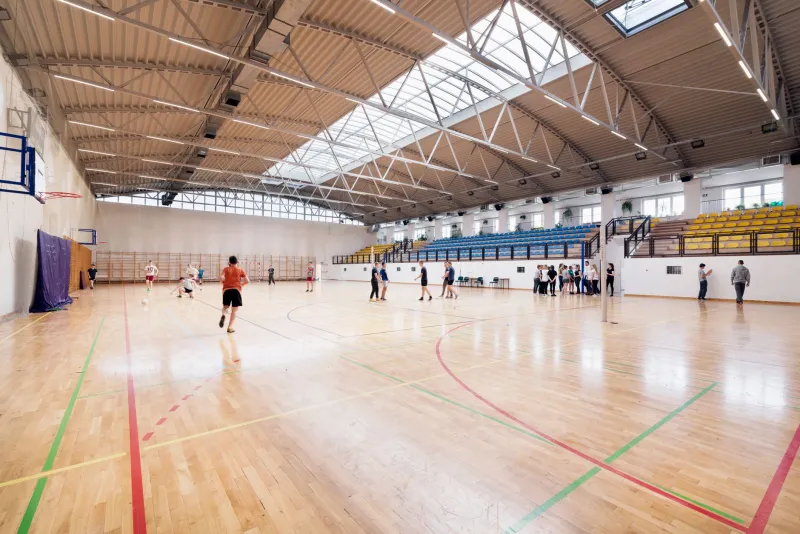
Facility investment targeted at younger adult priorities. Capital improvement planning should incorporate specific analysis of which facility features are most likely to attract and retain younger adult participants. Functional fitness spaces, dedicated pickleball courts, indoor turf areas suitable for small-sided soccer and other emerging sports, and improved locker and social gathering areas represent relatively high-return investments for this demographic. Departments should also evaluate extended operating hours, as younger working adults are disproportionately likely to exercise in early morning or late evening time windows.
Flexible programming structures. Reducing enrollment friction is achievable without significant capital expenditure. Drop-in fitness class availability, digital reservation systems that allow same-day booking, and punch-card or class-pack pricing models that accommodate irregular schedules can meaningfully improve the experience for younger adults who are evaluating whether public recreation fits their lifestyle.
Authentic community-building, not programmed community. Recreation departments have a structural advantage that no boutique studio can replicate: they are rooted in place and accountable to the public. Programming that leverages local identity—community runs tied to neighborhood history, fitness challenges that engage local businesses, adult leagues that connect participants to their specific town or district—can generate genuine belonging that a national fitness app cannot manufacture.
The Role of Digital Presence and Communication
No repositioning strategy will succeed if younger adults cannot easily find, evaluate, and register for programs through digital channels they actually use. A department's website, social media presence, and app or online registration experience are often the first—and sometimes only—point of contact with prospective younger participants.
Departments should audit their digital touchpoints with the same rigor they apply to facility inspections. Is the program catalog easy to navigate on a mobile device? Does the registration process require excessive steps or account creation barriers? Is the department's social media presence active and reflective of the community it serves, or does it function primarily as a one-way announcement board?
Investing in digital communication capacity—whether through staff training, dedicated personnel, or contracted support—is no longer optional for departments that wish to remain relevant to adults under 40.
A Long-Term Perspective
Recapturing younger adult participation is not a project with a defined completion date. It requires sustained attention to how public recreation is positioned, designed, and communicated across multiple budget cycles and leadership transitions. Departments that approach this challenge strategically—grounding their response in honest assessment rather than trend-chasing—are best positioned to rebuild their relevance with this demographic.
The commercial wellness market will continue to evolve and expand. Municipal recreation departments cannot match private operators on every dimension of the experience economy. What they can offer is something more durable: accessible, community-rooted recreation that serves the public interest across income levels, ability levels, and life stages. That value proposition, articulated clearly and backed by genuine operational investment, remains a compelling one. The work lies in making sure younger adults actually hear it.